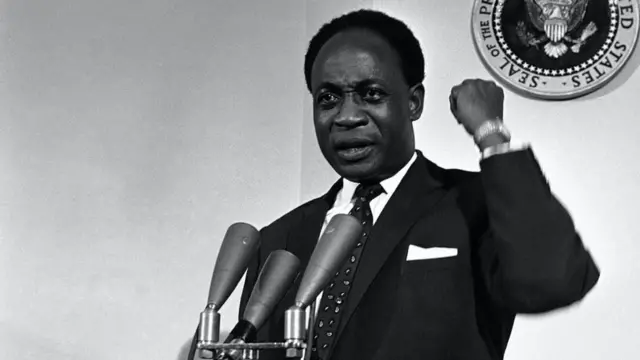
 Kwame Nkrumah was a Ghanaian politician, revolutionary, and statesman who played a significant role in the Pan-African movement. He is remembered as a pioneer of African unity and independence, and his legacy continues to inspire generations of Africans and people of African descent.
Early Life and Education
Kwame Nkrumah was born on September 21, 1909, in Nkroful, Gold Coast (now Ghana). He was educated at the Government Training College in Accra and later at Lincoln University in Pennsylvania, United States, where he earned a degree in theology and philosophy.
Political Career
Nkrumah’s political career began in the 1940s, when he became involved in the Ghanaian independence movement. He was a key figure in the Convention People’s Party (CPP), which fought for Ghana’s independence from British colonial rule. In 1952, Nkrumah became the prime minister of Ghana, and in 1960, he was elected president.
Contributions to Pan-Africanism
Nkrumah was a strong advocate for Pan-Africanism, believing that African nations should unite to achieve economic, political, and social development. He played a key role in the formation of the Organization of African Unity (OAU), which was established in 1963. Nkrumah’s vision for African unity was based on the principles of socialism, self-reliance, and collective action.
Key Achievements
1. Ghana’s Independence: Nkrumah led Ghana to independence in 1957, becoming the country’s first prime minister and later president.
2. Pan-African Movement: Nkrumah was a key figure in the Pan-African movement, advocating for African unity and cooperation.
3. African Unity: Nkrumah played a significant role in the formation of the OAU, which aimed to promote African unity and cooperation.
4. Economic Development: Nkrumah implemented various economic development projects, including the construction of the Akosombo Dam and the development of Ghana’s industrial sector.
Legacy
Nkrumah’s legacy is complex and multifaceted. He is remembered as a hero of African independence and a pioneer of Pan-Africanism. However, his authoritarian tendencies and economic policies have also been criticized. Despite these challenges, Nkrumah’s vision for African unity and development continues to inspire Africans and people of African descent around the world.
Key Concepts
– Pan-Africanism: A movement that seeks to promote unity, solidarity, and cooperation among people of African descent.
– African Unity: The idea that African nations should unite to achieve economic, political, and social development.
– Socialism: An economic and political system that emphasizes collective ownership and control of the means of production.
Further Reading
For those interested in learning more about Kwame Nkrumah and Pan-Africanism, recommended readings include:
– “Africa Must Unite” by Kwame Nkrumah
– “The Autobiography of Kwame Nkrumah”
– “Pan-Africanism: A Brief History”
By exploring the life and legacy of Kwame Nkrumah, we can gain a deeper understanding of the significance of Pan-Africanism and its role in shaping African history and identity.